Content

9 Days Birding Odyssey with Margaret - 20-28 Oct 2025


"As an experienced birder I have come across a variety of bird guides: some excellent, some good and some, well, a bit variable. He definitely fits in the top category. Knowledgable and good company. So it was fitting I saw my 4500th bird thanks to him. Onwards now to 5000!" - Margaret, UK


Peninsular Malaysia — a lush tapestry of mist-veiled highlands, ancient rainforests, and sunlit mangrove coasts — is one of Southeast Asia’s most evocative birding frontiers. Over nine days, I had the privilege of guiding Margaret, an avid birder, through a journey that stitched together the country’s most enchanting birding sanctuaries: Fraser’s Hill, Taman Negara, Bukit Rengit, Bukit Tinggi, and the local birding patches near Kuala Lumpur. Each location unveiled a new layer of biodiversity.

Days 1–3: The Whispering Forests of Fraser’s Hill

After meeting Margaret in Kuala Lumpur, we began our ascent toward the cool embrace of Fraser’s Hill, a colonial-era hill station nestled amid montane forest. Even before we reached our destination, the road offered early triumphs: Banded Bay Cuckoo, Orange-breasted Trogon, Red-bearded Bee-eater, Hume’s White-eye, Sunda Scimitar-Babbler, and the ever-charming Verditer Flycatcher — all among Margaret’s key targets.

For the next two full days, we explored both the hill station and the Gap area, reveling in the cool mists and the birds call echoing through the valleys. Fraser’s Hill rewarded us generously; Margaret’s list grew swiftly with montane specialties that make this site one of Malaysia’s crown jewels for birdwatchers.

Day 4–6: Taman Negara — Heart of the Ancient Rainforest

By the fourth day, we left the highlands behind and descended into the sweltering lowlands of Taman Negara, Malaysia’s oldest national park and one of the world’s oldest rainforests. Our goals here were ambitious — Garnet Pitta, Great Argus, and Malayan Peacock-Pheasant, among other elusive denizens of the jungle floor.

The weather, however, proved temperamental. Rains curtailed some of our hours in the field, yet perseverance paid off. Amid the dripping foliage, we recorded Rufous Piculet, Black-and-red Broadbill, and Moustached Babbler, among others. On the following morning, as sunlight pierced through the mist for our final session in the park, bird activity remained modest but rewarding — adding Purple-naped Spiderhunter, Grey-breasted Spiderhunter, and Chestnut-breasted Malkoha to our growing list.

From here, we journeyed to Bukit Rengit, a lesser-known gem. Our efforts were richly rewarded with Black Hornbill, Chestnut-winged Babbler, Chestnut-rumped Babbler, and Sooty-capped Babbler, each encounter reaffirming Malaysia’s extraordinary biodiversity.

Days 7–8: Hornbills and Highlands — Bukit Rengit to Bukit Tinggi

At dawn the next day, Bukit Rengit once again delivered surprises. The forest canopy stirred with color and sound as we spotted Violet Cuckoo, Buff-rumped Woodpecker, Wreathed Hornbill, Bar-bellied Cuckooshrike, Dark-throated Oriole, and Green Iora. By afternoon, we pressed on toward Bukit Tinggi, a highland resort famed for its pocket of forest still alive with rare species.

That evening, the forest resounded with the wingbeats of Great Hornbill, while Rufous Woodpecker and Drongo Cuckoo graced our list. The next morning brought a cascade of highlights: Rufous Piculet, Siberian Blue Robin, Long-tailed Broadbill, Crow-billed Drongo, Grey-bellied Bulbul, and Hill Blue Flycatcher — an impressive lineup for any birder.

After lunch, we returned toward Kuala Lumpur, where urban greenery offered unexpected rewards. Within city limits, we added Lineated Barbet, Crimson-winged Woodpecker, and Spectacled Spiderhunter — proof that even near the metropolis, avian life thrives.

Day 9: From City to Coast — The Final Quest

Our final day began with high hopes of finding the Barred Eagle-Owl, but the species eluded us. Undeterred, we drove to the coastal mangroves for one of Malaysia’s most charismatic birds — the Mangrove Pitta. Despite heavy traffic, we arrived just as the morning sun began to blaze, and almost miraculously, the pitta appeared almost instantly, glowing with color against the tangle of roots.

The morning also brought Ashy Tailorbird and Slaty-breasted Rail, before we made our way to a wetland near the airport — a fitting finale for a journey that began in the mountains. Here, we added Baya Weaver, Lesser Coucal, and Ashy Minivet, rounding off an exceptional list before we said our goodbyes and headed to the airport.

Summary: A Journey Through Malaysia’s Living Tapestry

In nine days, Margaret’s birding adventure through Peninsular Malaysia spanned every ecological layer — from misty montane forests to lowland dipterocarps, mangroves, and open wetlands. More than a checklist of sightings, it was a story of discovery, patience, and the quiet thrill that only the wild can offer.

From the electric flash of a Red-bearded Bee-eater in flight to the shy appearance of a Mangrove Pitta among coastal roots, each moment reinforced Malaysia’s standing as one of Southeast Asia’s premier birding destinations. For Margaret, and for any birder, Peninsular Malaysia remains a living, breathing sanctuary where every dawn brings the promise of wings yet unseen.


Distance covered on this trip: 1,400 km

---------------------------------------------------------------------------------

As I continue to immerse myself in the world of birds and nature, I am constantly inspired by the beauty and diversity of the natural world. I am grateful for the opportunity to share my work with others and to educate and inspire through my images. Your support and patience are truly appreciated as I strive to showcase the wonders of wildlife in the most authentic and impactful way possible. Together, we can raise awareness and appreciation for the importance of conservation and preservation of our planet's precious ecosystems. Thank you for joining me on this journey.

*UPDATE: After a series of consultations, the issue affecting my mobility has been identified. As a result, I will need to attend therapy. My travel plans must be tailored to minimize the amount of time spent walking, trekking on uneven terrain, and to avoid prolonged periods of standing or sitting.*

---------------------------------------------------------------------------------

Read more »

Steve in Fraser's Hill - 11-12 Oct 2025


The cool mountain air of Fraser’s Hill always brings a sense of calm, but for birders, it also carries a spark of excitement. On the morning of 11th October, Steve met Adam at the airport, and together they began their journey to this charming hill station — a place known for its misty forests, crisp weather, and incredible birdlife.
Steve taking a photo of a milipede with his mobile phone

Roadside birding
I had arrived the night before to scout out the best spots for Steve’s main target species — the dazzling Silver-eared Mesia. When Steve and Adam reached the hill station, I met them at the hotel and helped check in so they could travel light. Steve was too eager to rest; he decided to skip lunch and head straight out in search of his dream bird.
Our first stop was quiet. The forest was still, filled only with the hum of cicadas and the occasional appearance of Buff-breasted Babbler, Rufous-browed Flycatcher, Long-tailed Sibia and Chestnut-capped Laughingthrush. Hours passed without a sign of the mesia, so we moved to another site, where luck finally began to shift. A few colorful species appeared — enough to keep Steve’s camera clicking — and as the light softened in the late afternoon, we finally heard faint calls in the distance. Moments later, a small flock of Silver-eared Mesias appeared, their plumage glowing beautifully in the golden light.
Steve managed to photograph them, though most perched teasingly on power lines — not the perfect background, but still a satisfying sight. Before dusk, we made one last stop and spotted Black-browed Barbet and Orange-bellied Leafbird, both adding a final splash of color to the day. Then the heavens opened — rain poured down, and we hurried for shelter at a nearby restaurant. Over a warm meal, we shared stories, calling it a day well spent.
The next morning dawned fresh and cool. After breakfast, we made our way back to the stakeout. I thought we’d be the first to arrive, but a small group of photographers was already there, also waiting patiently for the Silver-eared Mesia.
Not long after we settled in, I heard the bird’s familiar call nearby. Moments later, the forest came alive — a flock of mesias burst into view, dancing through the branches in a swirl of color. Cameras clicked in unison, capturing the moment we had all been waiting for. I looked over at Steve — his smile said it all. Mission accomplished.
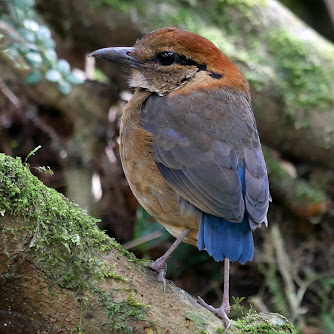
With the main target successfully photographed, I knew Steve had another list of birds he hoped to see before his flight home. We spent the rest of the morning exploring the hill station, where luck continued to be on our side. We found the Fire-tufted Barbet, Red-headed Trogon, Lesser Shortwing, and even the shy Rusty-naped Pitta among other gems — each sighting adding another highlight to his growing photo collection.
A light drizzle in the afternoon gave us a chance to pause for lunch before one final birding session. As the day drew to a close, Adam drove Steve back to the airport, wrapping up what had been a short but wonderfully rewarding adventure.
Fraser’s Hill, with its misty trails and symphony of bird calls, had once again proven why it remains a treasured paradise for birders — a place where patience, passion, and nature always come together in perfect harmony.


Oriental Magpie Robin

Buff-breasted Babbler

Wild Boar

Rusty-naped Pitta

Siamese Pit Viper

---------------------------------------------------------------------------------

Author’s Note

Fraser’s Hill is one of Malaysia’s classic birding destinations, easily accessible from Kuala Lumpur and home to more than 250 species of birds. The birding season is throughout the year but additional species can be seen from October to March, when migratory species are most active. Early mornings and late afternoons often provide the best light and bird activity.
If you plan to visit, bring a pair of binoculars, a camera with a good zoom lens, and a light rain jacket — the weather here changes quickly. Most importantly, be patient, stay quiet, and let the forest reveal its secrets at its own pace. For birders, that’s where the true magic of Fraser’s Hill lies.
---------------------------------------------------------------------------------

As I continue to immerse myself in the world of birds and nature, I am constantly inspired by the beauty and diversity of the natural world. I am grateful for the opportunity to share my work with others and to educate and inspire through my images. Your support and patience are truly appreciated as I strive to showcase the wonders of wildlife in the most authentic and impactful way possible. Together, we can raise awareness and appreciation for the importance of conservation and preservation of our planet's precious ecosystems. Thank you for joining me on this journey.

*UPDATE: After a series of consultations, the issue affecting my mobility has been identified. As a result, I will need to attend therapy. My travel plans must be tailored to minimize the amount of time spent walking, trekking on uneven terrain, and to avoid prolonged periods of standing or sitting.*

---------------------------------------------------------------------------------


Read more »

Hornbill is the main targets - 4-6 Oct 2025


A Hornbill Quest in the Malaysian Rainforest

They're back in Peninsular Malaysia, and this time, the mission was hornbills.

After a brief time in Taman Negara, we (Andrew and Jenny) pointed our car north toward the Belum-Temenggor Forest, home to a spectacular concentration of these majestic birds. The drive was a journey in itself, a five-hour stretch from the heart of the national park to the stunning, expansive man-made lake within the forest of Belum-Temenggor.

Once there, our adventure began on the water. With the expert guidance of our navigator, Azizan, we set out on a boat excursion focused purely on spotting avian giants. The dense jungle and tranquil waters didn't disappoint. While our main targets—the incredible Rhinoceros Hornbill, the critically endangered Helmeted Hornbill, the social Bushy-crested Hornbill, and the nomadic Plain-pouched Hornbill—were the true stars of the show, the trip offered so much more. We were also thrilled to photograph formidable raptors like the Lesser Fish-Eagle, Grey-headed Fish-Eagle, White-bellied Sea-Eagle, and the soaring Oriental Honey Buzzard.

Join us as we recount our incredible birding journey, the unforgettable sightings, and the sheer effort it took to track down some of Asia's most magnificent creatures deep within the Malaysian wilderness.

The scenic view in Belum-Temenggor forest

The water level was low during our visit to Belum-Temenggor forest

The tree top walk in Taman Negara was simply spectacular

The view from tree top walk

This is the mountainscape outside Andrew and Jenny's accommodation

Andrew was aiming at a Green Broadbill

Jenny was reviewing some the photos that we shot a few minutes ago

Here at the highest tower at Taman Negara tree top walk


We had dinner rest at the hotel's restaurant

Could have been the White-bellied Sea-Eagle

The lake is too big

Just an amazing view of the lake

The elephant was seen nearby

Waiting for the Rhinoceros Hornbill to take off

Jenny and Azizan concentrating on the Rhinoceros Hornbill

On the boating session in the late afternoon

---------------------------------------------------------------------------------

As I continue to immerse myself in the world of birds and nature, I am constantly inspired by the beauty and diversity of the natural world. I am grateful for the opportunity to share my work with others and to educate and inspire through my images. Your support and patience are truly appreciated as I strive to showcase the wonders of wildlife in the most authentic and impactful way possible. Together, we can raise awareness and appreciation for the importance of conservation and preservation of our planet's precious ecosystems. Thank you for joining me on this journey.

*UPDATE: After a series of consultations, the issue affecting my mobility has been identified. As a result, I will need to attend therapy. My travel plans must be tailored to minimize the amount of time spent walking, trekking on uneven terrain, and to avoid prolonged periods of standing or sitting.*

---------------------------------------------------------------------------------


Read more »

Explore Malaysia


Search This Blog

Contact Form

Name

Email *

Message *

Instagram

Instagram
Follow me on instagram @malaysianbirder

Birds of Peninsular Malaysia

Birds of Peninsular Malaysia

Wildlife in Peninsular Malaysia

Wildlife in Peninsular Malaysia
A collection of wildlife photographs in Peninsular Malaysia that includes mammals, reptiles and amphibians. Some photographs are taken with camera while some are taken with mobile phone whenever I get the opportunities to shoot while on a guiding assignment.

Insects

Insects
You will see other interesting insects during your birding adventure with me. Here are some of the photos I have extracted from my hard drives..

Butterflies of Peninsular Malaysia

Butterflies of Peninsular Malaysia
Collection of photographs for reference.

Notable Plants While Birding

Notable Plants While Birding
There will be some interesting flora that will definitely catch your attention while going out on a birdwatching trip with me. I am in the midst of compiling all the plants, please return to this website for updates. Thank you.

Southeast Asia Birding

Southeast Asia Birding
Sometimes I accompany my regular guests for birding trips out of Peninsular Malaysia. Check out what we found.
Powered by Blogger.

Blog Archive

Total Pageviews

About Me

Hi! I love watching birds, taking photographs (and video), and guiding people through nature. Welcome to my blog, A Malaysian Birder. I'll be sharing all the great birds I see and the photos I take right here on this blog. I got into bird watching when I was in university studying parks and recreation management. I used to work in parks and gardens, teaching people about the environment and organizing birding walks. Whenever I go out to look for birds, I always bring my binoculars and spotting scope to help me see them up close. Sometimes, I even bring a microphone to record their calls. It's always an adventure out in the field!

In the past, I will have my Kowa BDXD 8x32 binocular, Zoom H2N recorder, Kowa TSN-501 and my favorite Nikon1 V1 with a 70-300mm lens. This is the lightest setup I have tried and owned. From then onwards, I have used Omicron 8x26 binocular (and i bought 4 units), Leica Ultravid 8x32 binocular, Kowa Spotting Scope TSN773 with 20-60x eyepiece, Panasonic Lumix G7, Panasonic Lumix G9 with a 100-300mm lens and currently experimenting with Sony ILCE-A6700 and Sony SEL 200-600mm F5.6-6.3 G OSS lens.

Bird Watching Tours

There are quite a number of birding groups from Australia, United States and United Kingdom that come over to Malaysia annually visiting the traditional key sites that include Kuala Selangor, Fraser's Hill and Taman Negara. There is not doubt that the 3 sites are the preferred birding sites in Peninsular Malaysia. So if you are coming over for birding and intend to hire a guide, you can send me an email at nature2pixel@gmail.com and go over to posting section to view photos and summary of trip reports with testimonials from past clients.

Besides following the traditional route, I also customized trip according to clients needs, preference and interests. So there are some local patches that I can introduce to all bird watchers, digiscopers and photographers.

Here are a few of my favorite birding spots around Kuala Lumpur.

• Kuala Selangor - the habitats include mangrove forest. Good for woodpecker and kingfisher. Some amount of walking is required on flat terrain.

• Fraser's Hill - one of the traditional key sites for birding in Peninsular Malaysia and still the best place to visit. Elevation between 900 - 1200m above sea level. The species found here are different from the city of Kuala Lumpur. Targets may include Trogon, Woodpecker, Partridge, Laughingthrush, Leafbird, Spiderhunter and Sunbird.

• Hulu Langat - one of the most visited birding spot due to its proximity from the city centre. Walking is required but on easy terrain in this lowland forest. Sometimes need to wait at fruiting trees. Generally a good spot for Broadbill, Kingfisher, and Babbler.

• Bukit Tinggi - An alternative spot if you do not want to spend too long hours travelling to Fraser's Hill. It's about 900m to 1,000m above sea level and you get a combination of lowland and highland species at this elevation. Walking is required but just a short distance. Traditional known for Broadbill, Hornbill, Partridge and Pheasant.

• Gombak-Ampang - Generally recommended for photographers targeting Blue-eared Kingfisher and at times during fruiting season, it attracts many species of Bulbul and Barbet. Located in urban area.

Putrajaya - If you are staying in any hotel in Putrajaya, it's a good place to look for herons, egrets, bittern and storks.

Bird Families

Check the bird families and the taxonomy updates HERE.

My Artwork Products

Bird Video

I am also interested to take video of birds. Here are some of my favorite videos for your viewing. Video taken with Nikon1 V1 attached to a Sigma 500mm f4.5 and most of the time iPhone SE through the spotting scope. Editing is done on smartphone Power Director for Android device and I also like the iMovie on iPhone. Enjoy.

Recommended Field Guides & Books

If you are interested to get a copy of field guides to assist you to learn and identify birds in Malaysia. Click the followings to find out more.

March 2024. Fortunate enough to meet 1 of the authors before it was launched in Kuala Lumpur. Another great field guide for all birders who want to get the most updated information about birds of Malaysia.