The Jewel of the Understory: A Masterclass in Malaysian Pittas and Why They Define the Ultimate Birding Adventure
In the humid, shadowed realms of the Malaysian rainforest floor, where light filters through the ancient dipterocarp canopy in thin, emerald needles, lives a family of birds so vibrant they are often described as "shining jewels." To the uninitiated, they are the Pittidae, but to the global birding community, they are simply Pittas—the ultimate prize of any tropical expedition. For those planning a birding trip to Malaysia, understanding these elusive creatures is the difference between a simple walk in the woods and a life-changing encounter with avian perfection.
A Pitta is a medium-sized, suboscine passerine, characterized by its stout bill, incredibly short tail, and long, powerful legs designed for a life lived almost exclusively on the forest floor. The name "Pitta" carries a fascinating linguistic heritage; it is derived from the Telugu language of South India, where it means "small bird." However, in the context of Malaysian biodiversity, there is nothing "small" about their impact. They represent a specialized evolutionary branch that has mastered the art of terrestrial living. Birders are drawn to them not just for their rarity, but for their breathtaking "eight-colored" plumage. A single bird might exhibit neon blues, fiery reds, mossy greens, and deep velvety blacks, all arranged in patterns that seem more like a painter’s fever dream than a biological reality.
The behavior of these birds is as captivating as their appearance. Pittas are notoriously shy and secretive, often detected only by their soulful, whistling calls that echo through the humid air during the dawn chorus or after a tropical downpour. They are highly territorial, defending their patches of leaf litter with a surprising intensity. When feeding, they exhibit a characteristic "hop and pause" movement, using their strong bills to flick over leaves or dig into the soft earth. Their diet is primarily carnivorous, consisting of earthworms—their favorite staple—snails, spiders, beetles, and other terrestrial invertebrates.
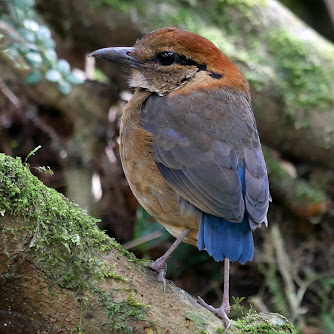
Malaysia serves as one of the most critical global hubs for this family, and the experience differs significantly between Peninsular Malaysia and Malaysian Borneo. According to the eBird/Clements Checklist, Peninsular Malaysia supports 8 species, including the montane-dwelling Rusty-naped Pitta, which is a high-elevation specialist found in the mossy forests of Fraser’s Hill and the Cameron Highlands. This is the only pitta in the region that prefers the cooler, high-altitude ridges over the tropical lowlands.
In the lowlands of the Peninsula, the Garnet Pitta and the Malayan Banded Pitta are the crown jewels, frequently sought after in the primary forests of Taman Negara. The coastal mangroves of Kuala Selangor provide the specialized habitat required for the Mangrove Pitta, while the Western Hooded Pitta and the Blue-winged Pitta serve as the region's primary migratory pulses, arriving in spectacular numbers during the breeding season.
Crossing over to Malaysian Borneo, the diversity increases to 10 recognized species, characterized by a high degree of endemism. Borneo is the exclusive home to the Blue-headed Pitta, the Blue-banded Pitta, and the Black-crowned Pitta (formerly known as Black-headed). The Bornean Banded Pitta, a distinct split from its mainland cousin, displays an even more intense orange-and-red crown that makes it a top-tier target for photographers in the Danum Valley. Both landmasses share the elusive Giant Pitta, a bird so rare and shy that it remains the "Holy Grail" for even the most seasoned guides.
The nesting season for Malaysian Pittas is primarily triggered by the onset of the monsoon rains, typically ranging from February to August. During this window, the birds become highly vocal, using their distinct whistles to establish territories and attract mates. Pittas build remarkable "dome" nests, usually placed on the ground or in low, thorny vegetation. These nests are side-opening structures made of twigs, roots, and moss, often camouflaged with dead leaves to blend into the forest floor. Both parents share the duties of incubating the eggs and feeding the hungry nestlings, which requires a massive increase in foraging activity—making this the best time for birding trips, as the birds are more likely to be seen carrying food back to the nest.
What truly makes a Pitta special among all birders is the "chase." Unlike canopy-dwelling birds that can be spotted with a wide-angle scan, Pittas require patience, stealth, and an expert guide who understands their specific micro-habitats. They exist in the "shadow zone," often just a few feet away from a trail, yet completely invisible until they move. For a wildlife photographer, capturing a Pitta in low-light conditions without disturbing the bird is a badge of honor. This is why joining a specialized birding trip in Malaysia is so vital. Local experts know the specific "calling perches" and the seasonal movements that dictate where these jewels will appear.
By visiting Malaysia, you are not just checking a name off a list; you are supporting the conservation of these ancient forests. Whether you are trekking through the historic trails of Taman Negara or exploring the riverine forests of the Kinabatangan in Borneo, the quest for the Pitta is the thread that ties the Malaysian birding experience together. These eight-colored jewels are waiting in the shadows, ready to transform your life list into a gallery of living color.
Confirmed eBird/Clements Checklist (Malaysia):
Peninsular Malaysia (8 Species):
Garnet Pitta (Erythropitta granatina) - Resident
Malayan Banded Pitta (Hydrornis irena) - Resident
Rusty-naped Pitta (Hydrornis oatesi) - Resident (Highlands)
Giant Pitta (Hydrornis caeruleus) - Resident (Very Rare)
Mangrove Pitta (Pitta megarhyncha) - Resident (Coastal)
Western Hooded Pitta (Pitta sordida) - Resident & Migrant
Blue-winged Pitta (Pitta moluccensis) - Breeding Migrant
Fairy Pitta (Pitta nympha) - Rare Vagrant
Malaysian Borneo (10 Species):
Garnet Pitta (Erythropitta granatina) - Resident
Blue-headed Pitta (Hydrornis baudii) - Endemic
Bornean Banded Pitta (Hydrornis schwaneri) - Endemic
Giant Pitta (Hydrornis caeruleus) - Resident (Rare)
Black-crowned Pitta (Pitta usheri) - Endemic
Blue-banded Pitta (Erythropitta arquata) - Endemic
Western Hooded Pitta (Pitta sordida) - Resident
Blue-winged Pitta (Pitta moluccensis) - Migrant
Fairy Pitta (Pitta nympha) - Rare Vagrant
Mangrove Pitta (Pitta megarhyncha) - Rare/Local